REVIEW · MIAMI
Miami Cocaine Capital in the 80’s- History tour-
Book on Viator →Operated by Boatmiamiboat -Boat rental tours in Miami- · Bookable on Viator
Cocaine money left Miami visible. This 1-hour Coconut Grove tour strings together early-1980s stories you can see on the streets, from the skyline to the Mutiny Hotel area.
I especially like the small group setup (up to 4 per car) and the convertible Jeep feel. I also like how the tour mixes the flash of Miami with specific cause-and-effect—like how real estate money connected to the drug trade.
One thing to consider: there’s no bathroom stop, and it runs only about an hour, so you’ll want to be ready for a quick, focused slice of a dark era.
In This Review
- Key things to know before you go
- Why this Miami tour feels different than a standard history walk
- Price and value: $75 for up to 4, and how that adds up
- Getting started at David T. Kennedy Park (and what to expect at the end)
- The skyline and real estate money stop: where the story starts
- Vizcaya Museum and Gardens: European elegance with a 1970s theft shock
- Coconut Grove and “The Grove” vibe: luxury, marinas, and peacocks
- Marinas as distribution channels: boats, speed, and patrol limits
- Miami City Hall stop: Pan Am flying boats to government building
- The Mutiny Hotel finale: where glamour met money and danger
- Who this tour is best for (and who might want a different option)
- Practical tips so you enjoy the whole hour
- Should you book Miami Cocaine Capital in the 80s?
- FAQ
- How long is the Miami Cocaine Capital in the 80’s History tour?
- What does it cost, and how many people can fit in a car?
- Where do we meet for the tour?
- Where does the tour end?
- Is there a bathroom during the tour?
- What’s included with the tour?
- What kind of ticket do you get?
- Which areas and landmarks does the tour cover?
- What happens if the weather is poor?
- What’s the cancellation policy for a full refund?
Key things to know before you go
- Convertible Jeep views: easy photo stops and open-air skyline energy.
- Small-group pace: max 4 guests per car, so you’re not stuck shoulder-to-shoulder.
- Coconut Grove focus: “The Grove” landmarks tied to the cocaine boom of the early 1980s.
- Real estate vs. drug money numbers: the tour brings hard figures into the story.
- Vizcaya’s art theft footnote: beauty on Biscayne Bay with a criminal twist.
- No bathroom included: plan ahead for the full hour on the road.
Why this Miami tour feels different than a standard history walk
This isn’t a slow museum loop. It’s a quick, streets-and-sightlines ride built around one specific question: how did Miami become the cocaine capital of the United States in the early 1980s?
You move through key neighborhoods—mostly Coconut Grove—and you get the feeling that the money wasn’t just underground. It shaped buildings, marinas, nightlife, and the kind of celebrity-and-crime overlap people associate with that era.
I like that the tour doesn’t only point at glamour. It also points at systems: real estate investment, distribution routes, and how certain waterfront areas made smuggling easier.
You can also read our reviews of more historical tours in Miami
Price and value: $75 for up to 4, and how that adds up
The cost is $75 per group (up to 4 people). For a group, that can be a fair deal because you’re paying for a private-style ride rather than being one face in a big crowd.
With an approx. 1-hour duration, it’s also easy to fit into a busy Miami day. You’re not buying a whole afternoon; you’re buying a guided hit of context tied to places you’ll recognize later when you walk around on your own.
The practical tradeoff is time. If you want every stop to turn into a long, detailed debate, this may feel fast. But if you want the main connections made clearly and quickly, it’s a good match.
Getting started at David T. Kennedy Park (and what to expect at the end)
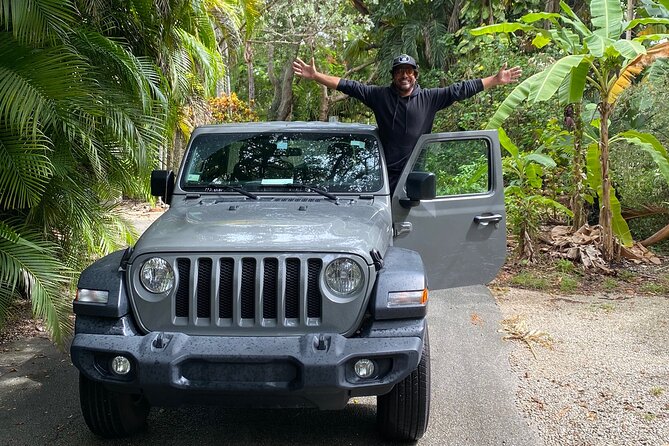
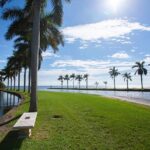
The tour meets at David T. Kennedy Park, 2400 S Bayshore Dr, Miami, FL 33133. You also end back at the same meeting point.
It’s near public transportation, which helps if you’re not driving. Still, because this experience is built around a convertible Jeep ride, you’ll want to arrive with a little buffer so you’re not stressed when your time starts.
You’ll receive a mobile ticket, and you’ll be placed into a small ride group (max 4 per car). Bottled water is included, and you can use Bluetooth to play your own music through the car setup.
The skyline and real estate money stop: where the story starts
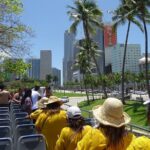
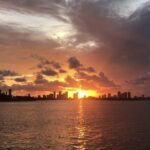
The first big impression is the Miami skyline, viewed from a convertible Jeep. This matters because the tour’s theme is about visibility: the drug trade didn’t just create risk; it created money flows that showed up in the city.
You’ll learn about the relationship between real estate and drug money, with figures shared on the economic scale. The tour frames it like this: in the local economy, real estate was generating about $9 billion a year, while the drug trade was estimated at around $12 billion flowing into the area.
For me, the value here is the cause-and-effect. Instead of treating the cocaine boom like a random crime headline, you see it tied to a major business engine in Miami—property and development.
A small consideration: this is still an overview. You’ll get the big numbers and connections, not a full economics lecture. If you enjoy street-level storytelling with some statistics, you’ll feel at home.
Vizcaya Museum and Gardens: European elegance with a 1970s theft shock
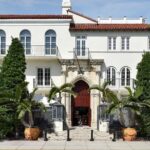
On the way to Coconut Grove, you pass Vizcaya Museum and Gardens, overlooking Biscayne Bay. It’s described as a European-style estate, and it’s easy to see why it draws crowds. Even if you don’t go inside, the architecture gives you a sense of Miami’s taste for big, dramatic building styles.
Then the tour turns the page from romance to reality. Vizcaya’s opulence also made it a target. In 1971, three New York residents raided the property and stole about $1.5 million in art, jewelry, and collectibles. Three days later, the robbers were found and caught in New York City—but only a small fraction of the items were recovered.
This stop works because it trains your eye. You start noticing how wealth attracts crime, and how Miami’s glamour could be used as cover or motivation in different eras.
The drawback? You’re passing by, not touring the museum. If you want interior details, you might later add a separate Vizcaya visit on your own.



Coconut Grove and “The Grove” vibe: luxury, marinas, and peacocks
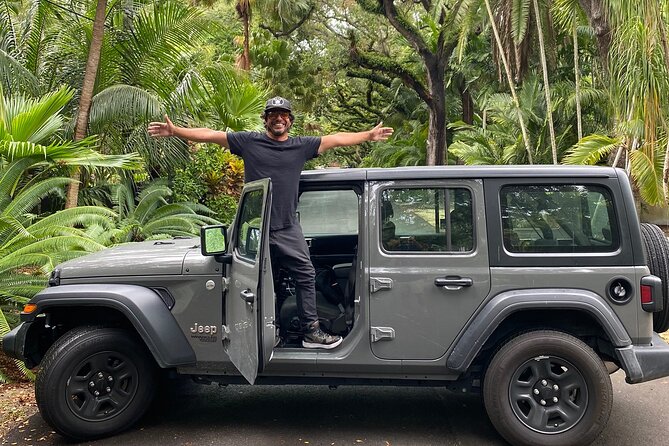
Coconut Grove is where the tour really leans into mood. You’ll hear it described as one of South Florida’s most energetic and welcoming corners, with an easy blend of marinas, upscale hotels, and a neighborhood feel.
A charming twist is the peacocks. The tour notes they roam freely, and you get a chance to spot them with their shimmery colors and flashy tails. It’s a bright contrast to the subject matter, and honestly, it helps keep the ride from becoming one long grim lesson.
In terms of the “why,” the tour connects Coconut Grove to the cocaine kingpin scene of the 1980s, specifically around the area tied to the Mutiny Hotel. You’re not only hearing names—you’re driving through the surrounding luxury district that made this lifestyle and these connections possible.
If you like walking around after a tour, Coconut Grove is a good place to do it. Even without a second plan, you can keep the story going with what you see outside the car.
Marinas as distribution channels: boats, speed, and patrol limits
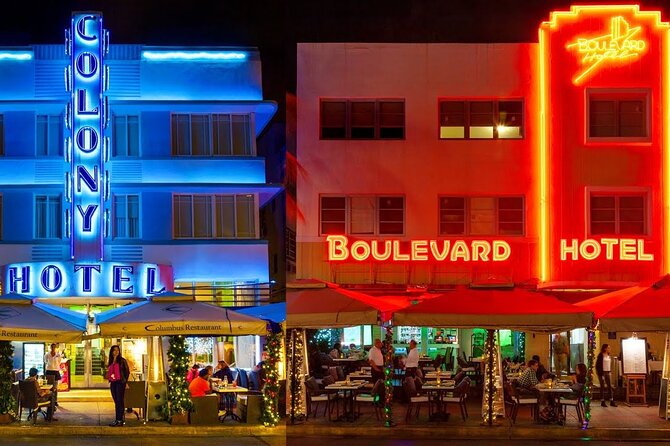
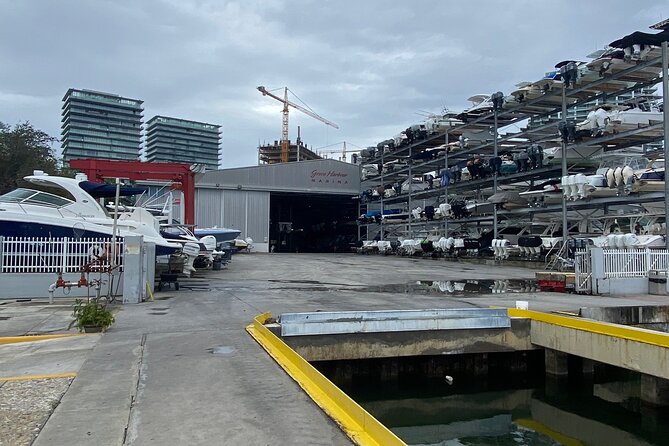
One of the most practical-feeling stops is when you pass a marina and talk about distribution channels used in the 1980s. The tour links this to older illegal waterfront patterns too, including the Prohibition era, when boats had been used as drug runners.
Here’s the core idea you’ll hear: drug dealers used boats to escape U.S. Coast Guards and DEA agents. The tour points out a key operational issue—back then, typical patrol boats couldn’t match the higher speeds of these smugglers’ vessels.
For me, this part adds realism. Miami isn’t just a stage for characters; it’s a geography problem. Waterways, speed, and enforcement reach matter, and the tour makes that clear with the marina setting.
A consideration: this is street-level context, not a boat ride. You’ll learn about routes from the land, so if you want pure maritime scenery, pair this with some kind of water-based activity later.
Miami City Hall stop: Pan Am flying boats to government building
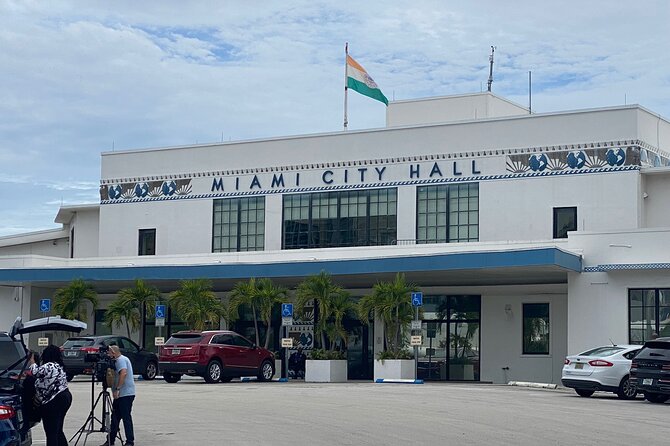
As you head toward the Mutiny area, you pass Miami City Hall. What’s now City Hall was built in 1934 by Pan American Airlines for its worldwide flying-boat terminal.
The building changed hands and roles quickly. In 1946, it was sold to the city. Before becoming City Hall, it had a stint as Jackie Heller’s Dinner Key Terrace restaurant. Then the city converted the building into City Hall in 1954.
This stop is a reminder that Miami keeps repurposing its infrastructure. The waterfront airport era, the dining era, and then the civic era all sit inside the same shell of place.
It also quietly reinforces a theme you’ll hear through the whole tour: money and power move into buildings that already look impressive. If you like how places evolve across decades, this is a worthwhile pause.
The Mutiny Hotel finale: where glamour met money and danger
The last stop is the most symbolic part of the cocaine-war era story. You’ll get the background of the Mutiny Hotel in Coconut Grove—described as a hotspot for drug dealers and celebrities during Miami’s cocaine heyday.
The tour also describes it as a mecca for 1980s cocaine kingpins. It’s said the hotel was sending off armored trucks with sacks of cash profits, and that it was doing major volume with luxury champagne, including Dom Pérignon.
You’ll hear about the mix of people connected to the scene—celebs, crooked pols, spies, informants, cops, and other players. The tone is that this was a place where lots of different agendas collided, all under a luxury umbrella.
This ending works best if you go in expecting a charged narrative. It isn’t trying to make the era pretty. It uses the Mutiny Hotel as a focal point so the city story gets a single, concrete anchor.
One thing to keep in mind: the tour is short. That means you’ll walk away with strong impressions and main connections, not with a fully footnoted account of every claim.
Who this tour is best for (and who might want a different option)
This is a great choice if you want:
- A guided ride through Coconut Grove’s key places tied to the early 1980s cocaine story.
- A mix of street views and historical context, not a long museum day.
- A small-group feel with a convertible car and music via Bluetooth.
It may be less ideal if you’re looking for:
- Deep museum time or interior access at every stop.
- Long, slow pacing (it’s about 1 hour total).
- A tour that avoids intense subject matter. This one squarely tackles the drug war era, including the ways money and crime intertwined.
Practical tips so you enjoy the whole hour
- Plan to start with water already taken care of—bottled water is included, but Miami heat can still surprise you.
- Wear something comfortable for a short ride and quick roadside views.
- Expect a no-bathroom setup. If you need one, handle it before you arrive at David T. Kennedy Park.
- If you’re coming as a group, coordinate so everyone arrives together. The experience is built around up to 4 guests per car.
Also, book ahead. The tour is often scheduled about 16 days in advance on average, so waiting until the last minute can reduce your choices—especially on good weather days.
Should you book Miami Cocaine Capital in the 80s?
I’d book it if you like Miami but want to understand the mechanics behind the myth. This experience gives you a compact, guided way to connect big money, real estate, and waterfront routes to the places you’ll actually pass through in Coconut Grove.
Skip it if you need bathroom access, you hate tight time windows, or you want a strictly light and feel-good city tour. The subject matter is serious, and the tour keeps the focus on that era rather than a broad overview of Miami.
If you’re curious about how a city’s skyline and waterfront can reflect power—both legitimate and criminal—this is one of the more pointed ways to learn.
FAQ
How long is the Miami Cocaine Capital in the 80’s History tour?
It runs for about 1 hour.
What does it cost, and how many people can fit in a car?
The price is $75.00 per group, and the car is set up for a maximum of 4 guests.
Where do we meet for the tour?
You meet at David T. Kennedy Park, 2400 S Bayshore Dr, Miami, FL 33133, USA.
Where does the tour end?
It ends back at the meeting point.
Is there a bathroom during the tour?
No. A bathroom is not included.
What’s included with the tour?
Included items are Bluetooth to play your own music, a driver guide, a convertible Jeep, small group setup (max 4 guests per car), and bottled water.
What kind of ticket do you get?
You receive a mobile ticket.
Which areas and landmarks does the tour cover?
It focuses mainly on Coconut Grove and includes stops along the way such as Vizcaya Museum and Gardens, Miami City Hall, and the Mutiny Hotel area.
What happens if the weather is poor?
The experience requires good weather. If it’s canceled due to poor weather, you’ll be offered a different date or a full refund.
What’s the cancellation policy for a full refund?
You can cancel for a full refund up to 24 hours before the experience starts. If you cancel less than 24 hours before, it won’t be refunded.