REVIEW · MIAMI
Flyboarding with Miami Watersports
Book on Viator →Operated by Miami Watersports · Bookable on Viator
A flyboard lesson in Miami sounds easy. Then you try to stand. What makes the experience at Miami Watersports interesting is the mix of quick, guided training and the real thrill of hopping above the water from Pier 9. It’s a short outing, but you get a focused shot at learning the basics fast.
I like the fact that you’re not thrown in solo. You get one-on-one tuition plus safety gear and a private instructor who keeps working with you in the water. And I really appreciate that spectators can watch for free from the dock, so friends or family can cheer instead of just dropping you off.
One drawback to plan for: the learning curve is real. Several riders said balance is harder than the marketing makes it sound, and a few also reported surprise add-ons (like marina taxes/surcharges) or frustrations with optional media packages and timing. If you want a smooth, predictable total price, you’ll need to ask a couple questions up front.
In This Review
- Key things to know before you flyboard at Miami Watersports
- Flyboarding at Miami Watersports Pier 9: what makes it a Miami must
- Your lesson plan: 10-minute briefing, 20 minutes in the water
- How hard is flyboarding really: balance, effort, and what to expect
- A practical mindset that works
- Price and add-ons: how to judge $129 value in the real world
- Optional media is where costs can creep
- Is the $129 still worth it?
- Instructors, pacing, and why the max 15-person setup feels personal
- What to do to get the most out of your session
- Dockside logistics that can make or break your day
- What to bring
- Waterproof phone case
- Spectators can watch
- Language matters
- Miami views from above the water: the fun part that actually matters
- Who should book Miami flyboarding, and who should pass
- Best fit
- Less ideal fit
- Should you book Miami Watersports flyboarding at Pier 9?
- FAQ
- How long is the flyboarding experience?
- What are the age and weight limits for flyboarding?
- Do I need to know how to swim?
- Can friends or family watch from the dock?
- What should I wear for flyboarding?
- What happens if weather delays or cancels the start time?
Key things to know before you flyboard at Miami Watersports
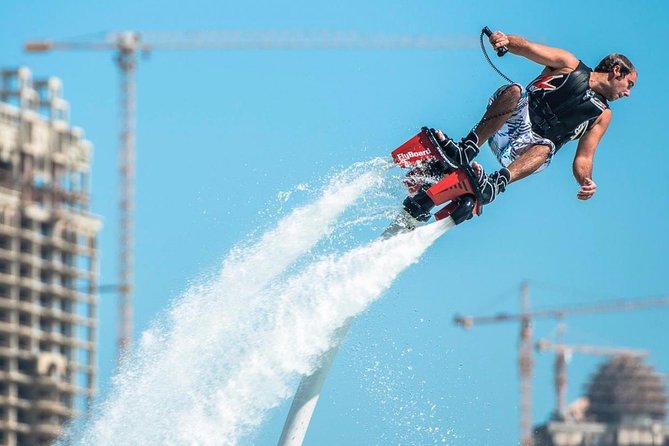
- Short training, then hands-on coaching: you get a briefing and then your instructor stays with you during the in-water practice
- Built-in safety limits: you’re capped at about 15–20 feet for safety while you learn
- Harder than it looks (in a good way): standing requires effort and core control, even for first-timers
- Dock viewing is easy: spectators can watch right from the marina dock with no extra charge
- Plan for English-only instruction: the safety directions require understanding English
- Optional photo/media costs can add up: ask what’s included so you’re not paying twice for the same thing
Flyboarding at Miami Watersports Pier 9: what makes it a Miami must
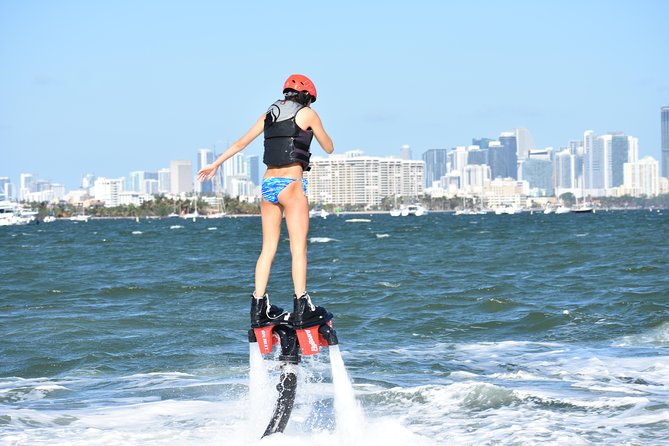
Miami flyboarding is the kind of activity that instantly turns your vacation into a story. You’re up on a board powered by a jet system, with the ocean right under you and the whole point of the session being: can you learn control before the timer runs out.
The Pier 9 location matters because it keeps the experience tight and practical. You’re not dealing with a long transfer to remote water. And since departures are typically available within operating hours and you’re scheduled by availability, you can often fit it into a beach day. Also, you can expect the feel of a real marina—busy, salty, and more “activity hub” than “storybook scenic overlook.”
Your session is designed for momentum. You don’t just watch someone else do tricks. You get a brief warm-up, then you practice with an instructor close by. That one-on-one setup is the difference between a demo and an actual lesson. In the real world, the person controlling your progress is the instructor’s style: step-by-step clarity, patience when you wobble, and quick corrections when your feet don’t do what your brain wants.
Instructors like James, Jason, Justin, Jensen, Kyle, Bobby, and Edward came up in rider feedback, and the common thread was clear communication and encouragement. That matters because flyboarding is part adrenaline and part stubborn physics.
Just know the water time is limited to about 20 minutes in the session window, so the vibe is fast-learning. You should show up ready to work, not to casually observe. Think of it like a sport lesson with splash damage.
You can also read our reviews of more tours and experiences in Miami.



Your lesson plan: 10-minute briefing, 20 minutes in the water
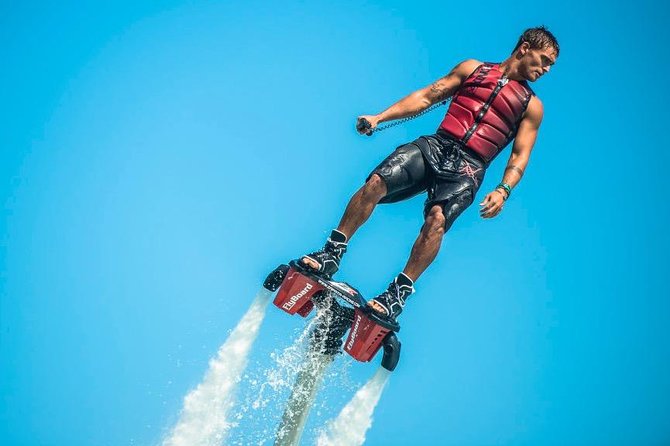
The standard flow is simple. You arrive, do paperwork, get a short briefing, then you’re suited up and on the board. The key detail is that the instructor doesn’t stop once you enter the water. They keep training you in the water the whole time.
Here’s what that usually means on the dock and in the first minutes:
- You’ll go over safety basics and how the system behaves.
- You’ll practice the stance and the body positioning needed to stay stable.
- You’ll work on small adjustments—because on a flyboard, small changes are everything.
The activity duration is listed at about 45 minutes total, with 10 minutes briefing and 20 minutes flying in the water. So even though the whole outing doesn’t feel long, you get enough time to attempt the fundamentals, get a few tries, and build confidence.
For height, you’ll be limited to about 15–20 feet for safety. In practice, that usually means you start lower to get control, then go higher as you prove you can keep your balance and respond to the instructor’s cues.
Safety equipment is included: life jacket and helmet, and all equipment is provided. The lesson also accounts for swimming ability. It’s recommended, but not required, because the equipment floats. That doesn’t mean you can ignore safety. It just means you’re not entering a situation where your body has to do all the work.
If you’re expecting a carefree “stand there and go” ride, you might feel surprised. Flyboarding is more like: stand, adjust, repeat. The good news is that the coaching is immediate, and many riders find they can get out on their first tries when the instruction clicks.
How hard is flyboarding really: balance, effort, and what to expect
Let’s talk honesty. Several riders said it was much more difficult to achieve than described—especially standing up and balancing on the platform. That’s not a reason to avoid flyboarding. It’s a reason to mentally prepare for it to feel like a workout.
Your challenge is not only balance. It’s balance while:
- you’re being pushed by powerful water thrust,
- you’re trying to stabilize your stance on a small platform,
- your feet and knees need to react quickly as the board steadies and shifts.
People who assume it will be effortless often get frustrated when the learning stage requires persistence. If you go in with a plan—listen closely, expect wobbling, and treat the first attempts as setup—you’ll probably enjoy it more.
Also, be ready for muscle effort. Even though you’re wearing flotation gear, staying controlled overhead uses your core, legs, and upper body more than you might expect. One rider basically summed it up as needing plenty muscles or it turns splashy fast. That’s a fair description of the physical reality.
A practical mindset that works
- Treat your first successful moments as progress, not perfection.
- Follow instructor cues without overthinking.
- If you lose balance, reset quickly. Don’t fight it for too long.
If you’re someone who likes clear coaching, this is one of the better “first extreme sport” options in Miami. But it’s still an activity where effort shows up quickly—especially if you’re tired from a beach day or you’re not used to keeping your legs steady under pressure.
Price and add-ons: how to judge $129 value in the real world
On paper, the price is $129 per person, and it includes a lot of the essentials:
- professional instructors
- all equipment and safety gear
- parking availability
- a 20-minute flyboard session
- fuel included
That inclusion is the big reason flyboarding can still feel like fair value if the day runs smoothly. You’re paying for staff, jet equipment, safety systems, and the training time—not just a “ride ticket.”
But then the mixed feedback starts to matter. Multiple riders reported extra charges at check-in, often described as surcharges, marina taxes, or hidden fees. One rider even said their final bill increased noticeably after arriving, and another said the pricing felt mismatched depending on the platform used.
So here’s the practical move: before you go, ask the operator what the final total will be. Not just the base price. Ask what is included and what can be added. If there’s a media/photo option, confirm the cost and how it works.



Optional media is where costs can creep
A media package is optional at check-in, and one staff response referenced a photo/video cost of $39 for that specific option. Even if that’s not the only package offered, it’s a good example of how you may be nudged toward add-ons once you’re already at the dock and excited.
If you care about getting air-time photos, ask how they capture the best moments. Some riders said media focused on early adjustment moments rather than the higher-air portion. If photos matter, don’t assume a camera will magically capture your best jump at the exact moment you master it.
Is the $129 still worth it?
For many people, yes, because you’re getting:
- gear + safety setup
- instruction
- a real chunk of water time
- a one-of-a-kind thrill
But if you’re on a tight budget, the total price may not stay at $129. Treat $129 as the baseline, and plan a bit of buffer for possible add-ons.
Instructors, pacing, and why the max 15-person setup feels personal
This activity caps at 15 travelers. That size matters because it keeps the day from turning into pure chaos. You’re still in a marina setting with other groups and operators, but your instructor time stays meaningful.
The biggest value here is the coaching style. Riders credited instructors for being patient and helpful, and that aligns with how flyboarding actually works. You don’t learn by watching a person for five minutes. You learn by correcting your stance, then trying again.
A few named instructors stood out:
- Jason and James were repeatedly described as helpful and encouraging
- Justin and Bobby were credited for good training and attention to progress
- Jensen and Kyle were praised for step-by-step explanation and patience
- Edward was mentioned in the context of tips and a positive, upbeat approach
You might not get the same person each time (and you shouldn’t plan your experience around a specific name), but it’s a sign that the operator’s standard isn’t just “sell the activity.” The goal seems to be to help you get results.
What to do to get the most out of your session
- Ask questions before you get in the water if anything feels unclear.
- Watch what the instructor has you do, then commit fully for your next attempt.
- Don’t rush your stance. Slow corrections usually work better than sudden moves.
Dockside logistics that can make or break your day
This experience is run from Miami Watersports, 3400 Pan American Dr, Pier 9, Miami, FL 33133. The start point is described as near public transportation, and parking is available in LOT 62 (parking rates may apply).
One detail that can surprise people: there aren’t restrooms/changing rooms at the marina. So show up ready. Use the restroom before you arrive, and wear what you need under your bathing suit. That also means you should plan how you’ll handle your phone and personal items.
What to bring
- A valid government ID or passport for paperwork
- A bathing suit you’re comfortable getting wet in (and that stays secure when you move around)
- Towels, if you have somewhere to change afterward
- If you want photos or videos, be ready to decide at check-in
Waterproof phone case
A waterproof phone case is optional at check-in. If you care about capturing the ride, it’s worth considering before you’re already in wetsuit-level dampness.
Spectators can watch
Friends and family can watch from the dock at no cost. That’s a big quality-of-life feature. It turns the waiting time into part of the fun instead of an awkward hangout.
Language matters
You must understand English for safety instructions. If English isn’t your strong language, you’ll want to plan around how you’ll understand safety guidance and operator cues.
Miami views from above the water: the fun part that actually matters
If you’re picturing the view—good. But the better point is why the view helps. When you’re up above the water, it’s easier to stay oriented and understand what your body needs to do. You’re not just learning “stand.” You’re learning a position in space, and the horizon plus ocean cues help.
You’ll be close enough to Miami’s vibe that it still feels like a trip, not a distant excursion. The location is described as roughly 10–30 minutes from Miami Beach depending on traffic. That range is real, and it affects your timing. If you’re pairing this with other beach plans, build in buffer time.
Also, because the session is short, you’re not stuck out there for hours. You get enough time to feel the adrenaline, then you’re back at the dock to rinse off and move on with your day.
One caution from rider comments: a couple people described marina water as dirty or filthy, and another said water conditions were questionable. I can’t control that for your day. What you can do is mentally accept that marina water will be what it is. Come prepared with a shower plan and expect wet gear. If you’re extremely sensitive about cleanliness, you might prefer a different water activity that keeps you further from marina conditions.
Who should book Miami flyboarding, and who should pass
Flyboarding at Miami Watersports is listed as suitable for age 9+. Riders under 18 need a parent or guardian to sign a waiver. The max weight is 250 lbs per rider.
There are also health considerations. Health conditions may prevent you from participating in certain activities. If you have a medical issue, the safest move is to ask ahead. Don’t “tough it out” based on adrenaline.
English understanding is required for safety instructions. If you’re traveling with someone who can’t follow English directions reliably, that can be a dealbreaker for safety clarity.
Best fit
- First-timers who want a guided, one-on-one instruction setup
- People who can handle a short workout disguised as an extreme sport
- Families or groups where others want to watch from the dock
Less ideal fit
- Anyone expecting an effortless ride with no balance effort
- People who need zero uncertainty about extra charges
- Riders who can’t follow safety instructions in English
Should you book Miami Watersports flyboarding at Pier 9?
If you want a Miami activity that’s genuinely out of the ordinary, I’d say this is a strong candidate. You’re getting the core ingredients that matter: included equipment, safety gear, and private instruction, plus a real 20-minute flying window. For many people, that’s enough time to learn the basics and feel proud, not just drenched.
But don’t treat the starting price as the whole story. Because you may see extra surcharges or optional media add-ons at check-in, it’s smart to ask what your total will be before you arrive. Also, take the difficulty seriously. Plan to work for your first stable moments, especially standing and balancing.
If you go in with the right expectations—short, coached, effort-based—and you confirm any potential extra costs ahead of time, you’ll likely walk away with the kind of memory that sticks longer than another beach photo.
FAQ
How long is the flyboarding experience?
It’s listed as about 45 minutes total, with a 10-minute briefing and about a 20-minute flyboard session in the water.
What are the age and weight limits for flyboarding?
Flyboarding participation starts at age 9. Riders have a max weight limit of 250 lbs per person.
Do I need to know how to swim?
Swimming is recommended but not required. The equipment floats, and you’ll be using a life jacket and helmet during the session.
Can friends or family watch from the dock?
Yes. Spectators are welcome and can watch from the dock at no additional cost.
What should I wear for flyboarding?
Wear a bathing suit. You will get fully wet, so choose something that fits tightly and won’t slide down while you’re in the water.
What happens if weather delays or cancels the start time?
The activity requires good weather. If it’s canceled due to poor weather, you’ll be offered a different date or a full refund. Start times may also be delayed or canceled due to weather or other factors, and you’ll receive a voucher to reschedule.