REVIEW · MIAMI
2 Hour Group Surf Lesson in Miami Beach
Book on Viator →Operated by Miami Adventures Tours · Bookable on Viator
Surfing starts with small wins.
If you’ve ever watched someone catch a wave and thought, I could never do that, this Miami Beach lesson is built to change your mind fast. You’ll get hands-on coaching that starts on the sand (so you learn how to move and where to stand) and then moves into the water for real attempts. The session is small, about 2 hours, and designed for beginner to low-intermediate surfers—where confidence matters as much as catching waves.
I especially like the two-part structure: first beach technique, then ocean instruction (with time left for you to practice). It also helps that the vibe is teacher-led and hype-focused; instructors like Bryant, Stephen, and Sebastian come up repeatedly for being patient, clear, and present in the water. That combination makes a first surf session feel less like a gamble and more like a skill lesson.
One thing to consider: timing can shift with conditions and safety, and that can affect how much time you spend actually on waves. Also, equipment and logistics can be uneven on some days—one person noted a board size that felt off and extra warmups that cut down water time. You’ll still leave having learned fundamentals, but set expectations for a session that adapts day to day.
In This Review
- Key things to know before you go
- How the 2 Hours Actually Break Down (and Why It Works)
- Miami Beach Logistics: Meeting Point, Parking Reality, and Carrying Less
- Beach Training That Builds Confidence Fast
- Ocean Time: Real Coaching, Real Attempts, Real Improvements
- One reality check
- When the Ocean Is Flat: Land Drills and Optional Paddleboard Time
- Gear and Group Size: Why the Small Number Helps
- Fitness Level and What You’ll Be Doing
- Price Value: What $85 Buys in Miami Beach
- Should You Book This Miami Beach Surf Lesson?
- FAQ
- How long is the surf lesson?
- Do I get a surfboard included?
- Where do I meet for the lesson?
- Can I store my belongings during the lesson?
- What if there are no waves that day?
- How many people are in each group?
- Is the experience beginner-friendly?
- Should I book this surf lesson in Miami? (Quick decision)
Key things to know before you go

- Beach training first: about 20–30 minutes to learn paddling, board positioning, and wave awareness
- Ocean coaching second: roughly 60–80 minutes with an instructor in the water
- Small group size: up to 6 people, so you’re not lost in the crowd
- Boards included: surfboards are provided in the $85 price
- Valuables storage available: you can use a locked van if you want
- If the ocean is flat: expect a land-based surf lesson and an option to practice using surfboards or stand-up paddleboards
How the 2 Hours Actually Break Down (and Why It Works)
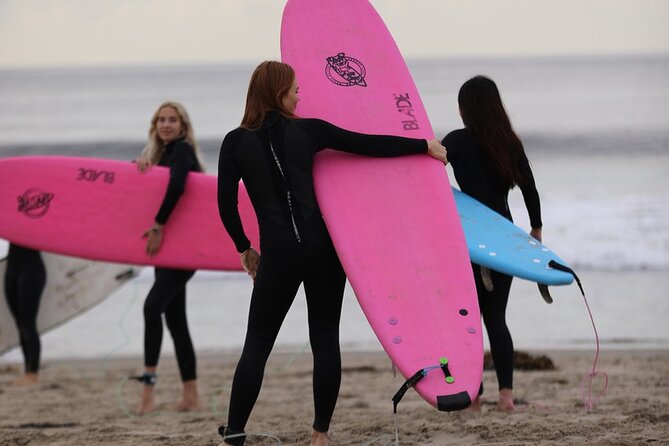
This lesson is built like a training session, not a show. You’ll start on Miami Beach with your instructor, working through the basics you’ll need the second you’re holding a board and trying to read the water.
The flow is simple:
- 20–30 minutes on the beach: you’ll train key movements and get your bearings—how to place the board, how to paddle efficiently, and how to spot what waves are worth your effort.
- 60–80 minutes in the ocean: this is where the instructor helps you apply that training. You’re not just free-surfing; you’re getting direct feedback as you try.
- Remaining time for practice: once you’ve been coached, you’ll get time to repeat the motions, build comfort, and try again.
For beginners, that structure matters. First-time surf lessons can fail when you go straight to the water with no plan. Here, you learn how to move and what to watch, then you test it immediately. The result is usually less panic and more progress.
You can also read our reviews of more tours and experiences in Miami



Miami Beach Logistics: Meeting Point, Parking Reality, and Carrying Less
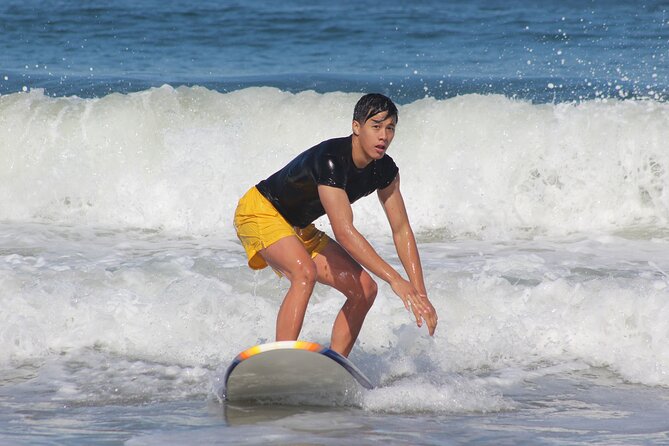
You’ll meet at Miami Beach Parking Lot 3, Washington Ave, Miami Beach, FL 33139, and the activity ends back at the same meeting point. That round-trip setup makes it easier: you’re not trying to navigate a second drop-off after you’re wet, tired, and wearing sand in places sand shouldn’t be.
A practical note: parking near the beach can cost money, and Miami traffic can be its own sport. One couple flagged that parking was frustrating. Go in with patience, and consider arriving a bit early to reduce stress.
Also, plan to carry only what you need. You’ll likely want:
- a swimsuit you can wear all session
- water-friendly footwear (or at least something you’re comfortable walking in)
- sunscreen and a hat
- a towel if you want one (the lesson includes boards, not personal comfort items)
If you have valuables, you can store them in a locked van during the lesson. That’s a simple convenience that can make a big difference. It lets you focus on learning instead of worrying about your phone bag while you’re trying to paddle.
Beach Training That Builds Confidence Fast
The beach phase isn’t filler. It’s where the instructor sets you up for success so the ocean time becomes productive instead of just wet.
You’ll work on the fundamentals that usually decide whether a beginner stands up:
- paddling: learning how to propel without tiring out too fast
- board positioning: getting the board aligned so you’re not fighting the surf the whole time
- spotting waves: figuring out which waves to aim for, not just chasing anything that looks close
- basic control: learning what to do when your board wobbles or when the timing is off
I like this emphasis because it reduces guesswork. When people fail in the water, it’s often not because they lack effort—it’s because the body mechanics and timing aren’t in place yet. A short, coached beach session helps you get those mechanics started before you’re dealing with waves, wind, and saltwater at the same time.
And yes, the instructor matters here. The strongest positive notes in the feedback are about instructors staying patient and engaged, with clear instruction and humor when appropriate. Names that come up: Bryant, who’s described as knowledgeable and patient for first-timers; Stephen, praised for motivation and coaching right in the water; and Sebastian, credited with helping people get turns and stand-up skills.
Ocean Time: Real Coaching, Real Attempts, Real Improvements
This is the part most people sign up for: instructor support once you’re actually in the water. You’ll have about 60–80 minutes with guidance, which is enough time to try more than once and build a little momentum.
In a good surf lesson, the instructor can see what you can’t. You’re focused on paddling and timing; you’re not watching whether your feet are set right, whether your hips are aligned, or whether you’re taking off too early or too late. Instructors like Stephen and Sebastian (based on feedback) are repeatedly described as being right there, encouraging you, and sharing practical tips that make standing up feel less mysterious.
For low-intermediate surfers, this lesson still tends to work well because it’s not just about catching one wave. It’s about improving specific skills—so even if conditions aren’t perfect, you’re still leaving with a clearer idea of what to practice next.
One reality check
Not every day has perfect surf. Even the lesson itself notes that it requires good weather and real waves. If conditions are weaker, you might get fewer big moments—or you might be doing more focused drills rather than long ride attempts. That’s not a failure. It’s part of surfing.
You can also read our reviews of more tours and experiences in Miami




When the Ocean Is Flat: Land Drills and Optional Paddleboard Time
Surf lessons in Miami don’t run on your schedule; they run on ocean conditions. On days when the water is absolutely flat and there are no waves to surf, the plan shifts.
Instead of wasting time, you can expect a regular land lesson using surfboards. You may also have an option to practice skills in the ocean using surfboards or stand-up paddle boards (SUP), depending on what’s happening that day.
This matters because it keeps the lesson valuable even when surf is scarce. If you’re the type who hates paying for a dud, this is one reason the experience can still feel worthwhile—especially if your instructor keeps teaching fundamentals even without waves.
Gear and Group Size: Why the Small Number Helps
The lesson caps at up to 6 people, which is a big deal for beginners. You’re less likely to be stuck watching from the beach while other people get all the attention. Smaller groups also mean instructors can correct your stance, your paddling rhythm, and your wave selection faster.
Surfboards are provided and included in the price. That’s great for visitors who don’t want to haul gear or buy a board just for one outing. In general, having a board already selected for you reduces friction.
One caution from feedback: board fit can make or break the lesson. One person noted that the board size didn’t feel right and made standing more unstable. That isn’t something you can guarantee will never happen, but it’s a good reason to speak up if the board feels wrong. If something feels off, tell your instructor immediately so they can adjust your setup if possible.
Fitness Level and What You’ll Be Doing
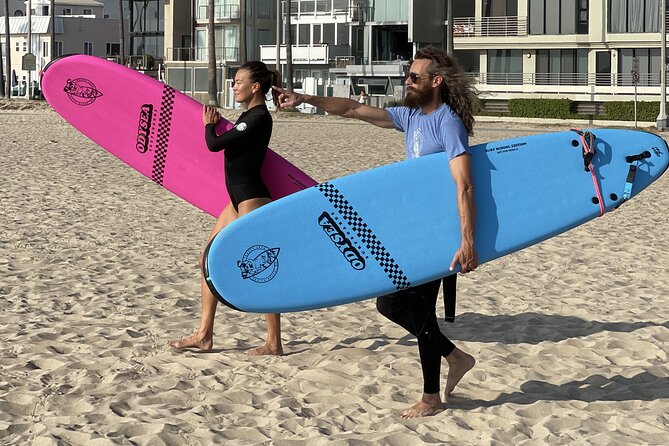
You should have a moderate physical fitness level. That doesn’t mean you need to be an athlete, but surf isn’t passive. Expect:
- repeated paddling
- getting up and down from the board
- short bursts of effort while timing waves
- stretching and warmups when needed
Some people also reported having pushups, squats, jogging, planks, and other warmup-style exercises. Warmups can be useful—especially for newcomers—but if you’re hoping for nonstop water time, it helps to know that the session may include extra movement on certain days.
Price Value: What $85 Buys in Miami Beach
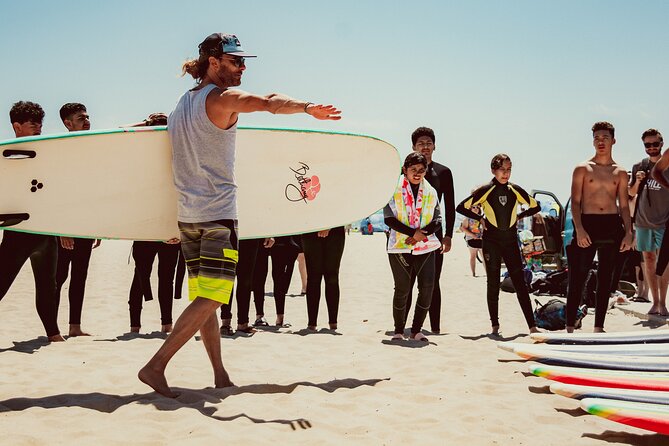
At $85 per person for about 2 hours, the value comes from what’s included and what you’re buying.
You’re not paying for just a vague orientation. You’re paying for:
- a structured lesson format (beach technique + ocean coaching)
- instructor attention in and out of the water
- a surfboard provided
- a class size small enough to be coached
When surf conditions cooperate, this can feel like a bargain because you’re learning quickly and getting enough attempts to actually improve. When conditions are weaker (flat ocean days), the lesson may become more drill-based, with potentially less wave action. In those cases, it can still be worth it if you care about fundamentals and getting time in the ocean using surfboards or SUP.
Compared to paying separately for gear, rentals, and instruction, the package price is a clean deal—especially if it’s your first time and you want guidance rather than trial-and-error.
Should You Book This Miami Beach Surf Lesson?
I think you should book if:
- you’re a beginner or low-intermediate surfer
- you want a lesson that starts on land and explains what to do before you’re in the water
- you like the idea of small group coaching and someone who’s encouraging you in real time
- you want an included board and a straightforward 2-hour format
I’d pause or manage expectations if:
- you’re only interested in lots of wave rides and hate warmups or drill-heavy days
- you’re extremely sensitive to timing changes caused by weather or safety adjustments
- you’re booking on a day when conditions might be marginal and you’d prefer a more guaranteed ocean session
If you do book, go with a simple mindset: you’re here to learn the mechanics, not to prove you’re a pro. With instructors like Stephen and Bryant repeatedly praised for patience, humor, and motivation, the odds are good you’ll leave feeling more capable than you arrived—and that’s the real win.
FAQ
How long is the surf lesson?
The experience runs for about 2 hours. It typically includes 20–30 minutes of training on the beach, then 60–80 minutes in the ocean with an instructor, plus extra time for practice.
Do I get a surfboard included?
Yes. Surfboards are provided and included in the price.
Where do I meet for the lesson?
You meet at Miami Beach Parking Lot 3 on Washington Ave, Miami Beach, FL 33139. The lesson ends back at the same meeting point.
Can I store my belongings during the lesson?
If you want, you can store belongings and valuables in a locked van while you’re training.
What if there are no waves that day?
If the ocean is flat and there are no waves to surf, the lesson can switch to a land-based session. You may also have an option to practice skills in the ocean using surfboards or stand-up paddle boards.
How many people are in each group?
The maximum group size is 6.
Is the experience beginner-friendly?
Yes. It’s described as a great fit for beginners and low-intermediate surfers, with the main goal of giving you a strong surf experience plus lasting knowledge.
Should I book this surf lesson in Miami? (Quick decision)
If you want a structured, coach-led first surf experience with included boards and a small group, this is a solid pick—especially if you’ll be happy practicing fundamentals even when wave conditions aren’t perfect. If your priority is guaranteed big-wave riding, then you may want to wait for a day when the ocean is firing.