REVIEW · MIAMI
Miami: Windsurfing for Beginners and Experts
Book on GetYourGuide →Operated by Miami Watersports · Bookable on GetYourGuide
Wind is the star here, not the stress. This Miami-area windsurfing session runs out of Key Biscayne, where you get close-to-city convenience and training in calm, shallow water. The mix matters: beginners can build skills without the ocean feeling intimidating, while more advanced riders get chances for stronger conditions when you head toward the open water.
I also like how the experience is designed around progress. You practice in protected bay water that stays relatively calm, then improve your control step by step, with support from an English/French/Spanish instructor. One thing to keep in mind: the listed price is not the whole bill, since you also pay a $40 beach fee/tax/insurance due upon arrival.
Key details like small-group size (up to 10) and straightforward safety rules help too. Your gear gets handled for you with a standard 1-hour setup rental plus safety equipment, and the day stays simple. The main drawback is planning around daylight: equipment must be returned 30 minutes before sunset, and start times can shift with weather.
In This Review
- Key Biscayne Bay: The Training Ground That Makes It Click
- The 1-Hour Flow: Gear Up, Learn, Then Put It to Work
- Beginner-Friendly Magic: Waist-Deep Water and a Real Safety Net
- Advanced Riding Options: Stronger Ocean Wind When You’re Ready
- Price and Value: $39 Is Just the Start
- Meeting Point on Key Biscayne: How to Find the Containers
- What’s Included, What’s Optional, and How to Choose Upgrades
- Safety and Timing: The Sunset Rule You Should Respect
- Who This Windsurfing Session Fits Best
- Should You Book This Miami Windsurfing Session?
- FAQ
- How much does it cost?
- How long is the windsurfing session?
- What skill level is this for?
- Where exactly do I meet for check-in?
- What do I need to bring to check in?
- Is there an age limit?
- How big is the group?
- What’s included in the rental?
- Can I add lessons or extra time?
- What time constraints should I plan for?
Key Biscayne Bay: The Training Ground That Makes It Click
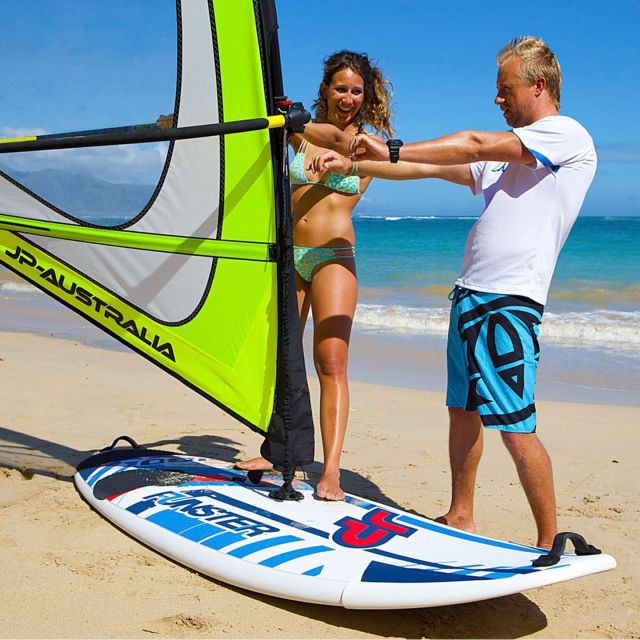
This is one of those windsurfing setups that feels practical, not showy. Key Biscayne sits right by Miami, but the bay area is protected by the island itself. That means you get a water surface that’s much more forgiving than big, open-ocean conditions.
The big win for you—especially if you’re new—is the water depth and how it changes the risk. The experience is built around training in an area where the water is only around waist height. That gives you a real safety net: if something goes sideways, you can generally step off and walk back toward shore.
For higher-level riders, the day isn’t just a slow cruise in calm water. When conditions and routes line up, advanced windsurfers can also get miles of open water with nice strong winds as you pass by the ocean. So you’re not stuck in one “training-only” bubble.
The 1-Hour Flow: Gear Up, Learn, Then Put It to Work
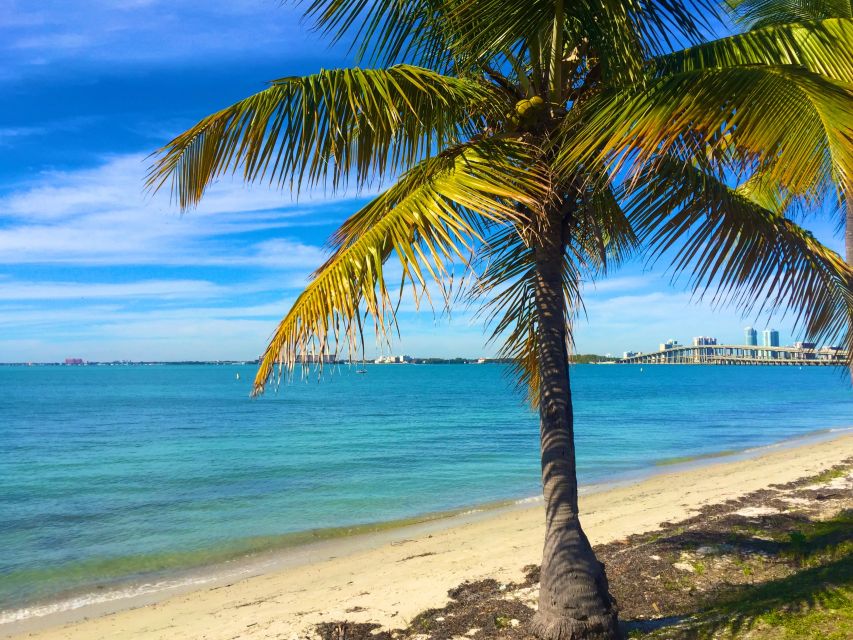
Think of your session as a short, focused cycle: show up, get fitted, get coached, and then practice in the right zone for your level. The whole windsurfing block is 1 hour, and you’ll want to match your arrival time to your allocated start time (which can be delayed due to weather or other factors).
Once you’re checked in, you’ll get a standard windsurfing setup for the session. That includes the basics you need to get moving, along with all included safety equipment. The on-water coaching approach is designed to keep you from feeling lost; you’re not just renting gear and hoping for the best.
The practical rhythm looks like this: you begin in the calmer, shallower section to build body position and sail control, then you progress within that environment as you gain confidence. If you’re more experienced, you’ll spend more time where the wind opens up and you can practice stronger riding.
Even the “shortness” of the experience helps. With only a 1-hour window, you can treat it like a skill sprint: learn the key movements, try them immediately, and walk away with a clear sense of what to practice next.
You can also read our reviews of more tours and experiences in Miami.



Beginner-Friendly Magic: Waist-Deep Water and a Real Safety Net
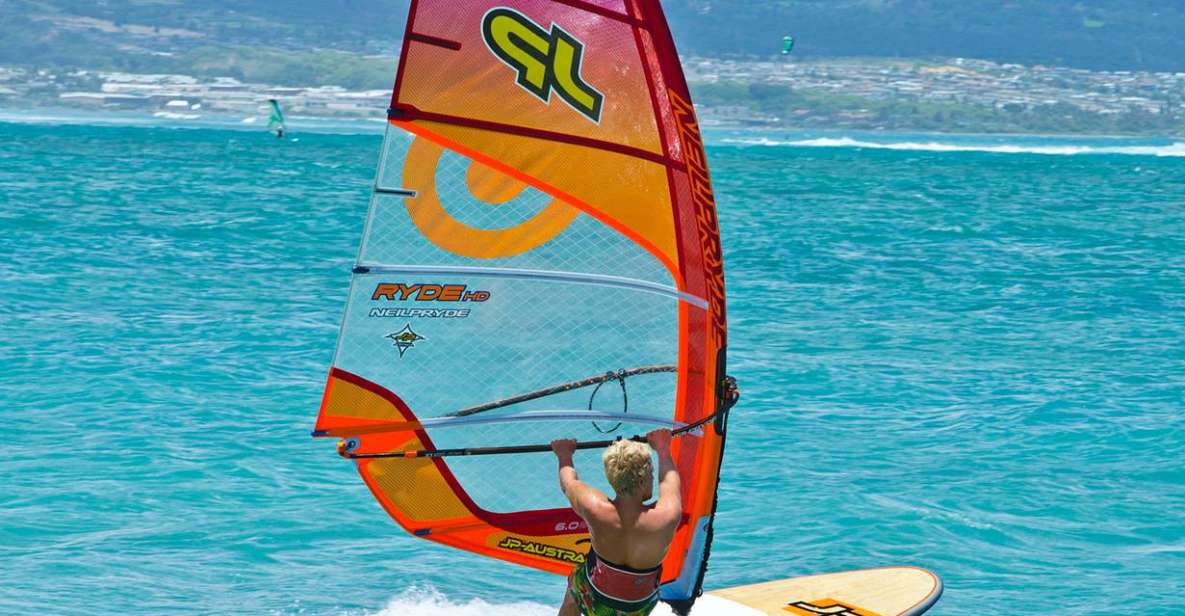
If you’re a first-timer, this location is built around one simple idea: controlled failure. In shallow water, you don’t have to panic about consequences the way you might in deeper surf.
The experience focuses on calm bay conditions and waist-height depth, which gives you room to learn without constantly fighting the water. You can reset quickly. If you tip or lose your balance, stepping off and walking back toward the beach is an option that keeps the whole learning curve less scary.
You also get the benefit of a protected environment. The bay stays relatively calm because it’s shielded by Key Biscayne, so you’re working with wind and water that are more predictable. That makes it easier to connect what your instructor says—sail angles, balance, and control—with what you feel under your feet.
Another underrated beginner win is time efficiency. Since it’s a single 1-hour session, you’re not committing your whole day to windsurfing logistics. You can try it, learn the basics, and decide if you want to come back for more.
Advanced Riding Options: Stronger Ocean Wind When You’re Ready
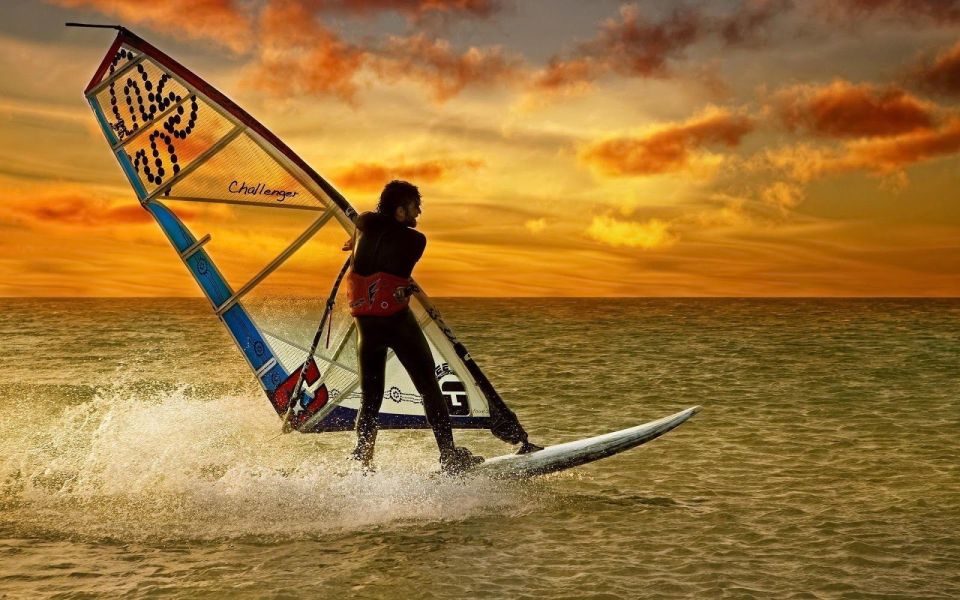
If you’re already comfortable on a board, this experience offers a path forward without making you repeat the same beginner drills forever. The bay can still be useful for refining technique, but the day includes opportunities to access open water where winds can be stronger.
The description calls out miles of open water with nice strong winds as you pass by the ocean. That matters because advanced windsurfing often isn’t just about balance—it’s about handling speed, sail power, and wind shifts with more space around you.
Practically, this means your instructor can tailor where you ride during the session based on level and conditions. If you’re pushing performance, you’ll likely get more exposure to the stronger wind side of the route.
One good way to think about it: this isn’t a one-size session where experts get bored and beginners get overwhelmed. It’s built for a range, which is exactly what you want if you’ve got a mixed group or if you’re somewhere between “brand-new” and “advanced.”
Price and Value: $39 Is Just the Start
The headline price is $39 per person for a 1-hour rental of a standard windsurfing setup, plus all safety equipment. You also get free parking, access to a bathroom/shower, and storage space. Those extras matter more than they sound. When you’re handling gear and moving from water to beach, having storage and basic facilities keeps the whole day from feeling messy.
But here’s the budgeting reality: there’s also $40 due upon arrival to cover beach fee, tax, and insurance. So plan on roughly $79 total per person for the core experience, before any optional upgrades.
Is it good value? For me, it still can be, because you’re paying for more than a board. You’re paying for a setup that’s ready for you, safety gear, and instruction on the water. Many people get stuck thinking windsurfing is only “equipment rental.” Here, coaching and a managed environment are part of the deal.
Optional add-ons may also affect your final spend. You can check in for upgrades such as:
- Performance gear upgrades
- Increased duration
- Lessons
- A harness (optional at check-in)
- A waterproof phone case (optional at check-in)
If you’re new, I’d expect most of your improvement to come from coaching and repetition, not from buying performance gear. If you’re already advanced, upgrades might matter more to you if the standard setup doesn’t match what you usually ride.
Meeting Point on Key Biscayne: How to Find the Containers
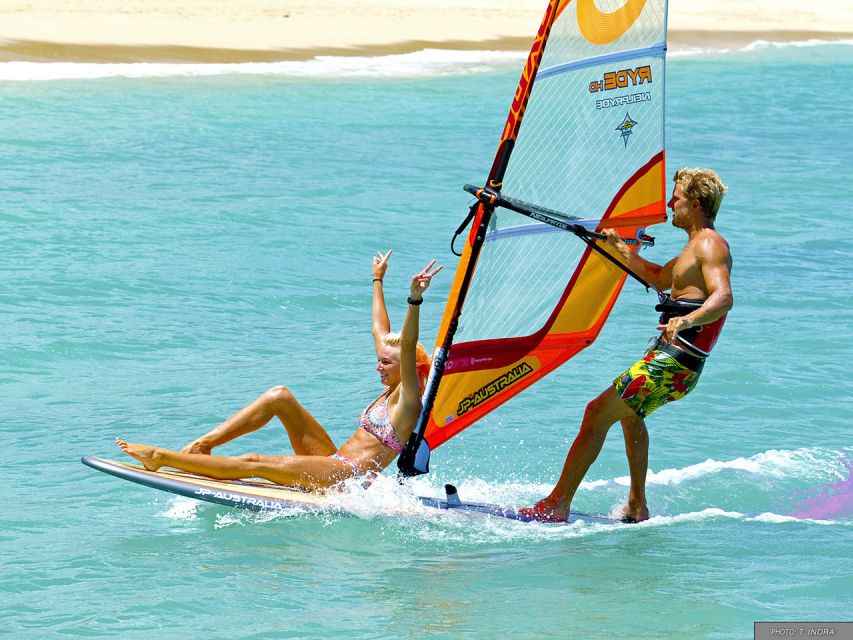
You’ll meet after you enter Key Biscayne via the toll. Then take the first beach entrance on your right. Once you’re in the beach parking lot, keep driving along the beach until you see two large containers with flag poles around them. That’s where the team is.
It’s a beach area, so don’t cut it close. If weather changes your start time, having slack in your arrival plan helps. Also, make sure you bring the right documents, because check-in requires ID.
Check-in is straightforward: you’ll provide the full name used on your booking, and the staff will check you into their system. A valid ID or passport is required, and you’ll complete paperwork at check-in.
At the end, the activity finishes back at the meeting point. You’re not signing up for some far-off transfer or a long ride back to civilization.



What’s Included, What’s Optional, and How to Choose Upgrades
Included in your rental:
- 1-hour rental of a standard windsurfing setup
- All safety equipment
- Free parking
- Bathroom/shower access
- Storage space
That’s a solid package because it covers the stuff that usually costs extra time on your day. You don’t have to worry about bringing your own storage solution or hunting for basics once you’re wet.
Optional upgrades at check-in can change the experience depending on your needs:
- Lessons (available if you want more structured coaching than what’s already included)
- Performance gear upgrade (if you want better matching for your level)
- Increased duration (if 1 hour feels too short)
- Harness (optional at check-in)
- Waterproof phone case (optional)
If you’re unsure what to add, here’s a practical approach: start with the standard session and watch what you struggle with during the first hour. If you’re still trying to master core control, adding lessons can be a good next step. If you’re already comfortable and want more speed or challenge, you can consider performance gear or extra time.
Also note the instructor languages: English, French, and Spanish. If you prefer one of those languages, it helps to plan your communication so coaching is easy to follow.
Safety and Timing: The Sunset Rule You Should Respect
This activity includes clear safety constraints and timing limits. Start times may shift due to weather or other factors, which is normal for wind-based sports. Your best bet is to treat your session time as “weather-aware,” not a fixed clock appointment.
Equipment must be returned 30 minutes before sunset. That’s important for two reasons. First, it affects your ride time if sunset is early. Second, it keeps you from being the person who’s still trying to squeeze in one more run when it’s time to head back.
Minimum age is 5 years old, and a parent or guardian must be present for anyone under 18. Participants also complete paperwork at check-in, with a valid photo ID or passport required.
Finally, the group is small—limited to 10 participants. That’s a meaningful difference in a sport like this, where feedback matters and you don’t want to be waiting for attention.
Who This Windsurfing Session Fits Best
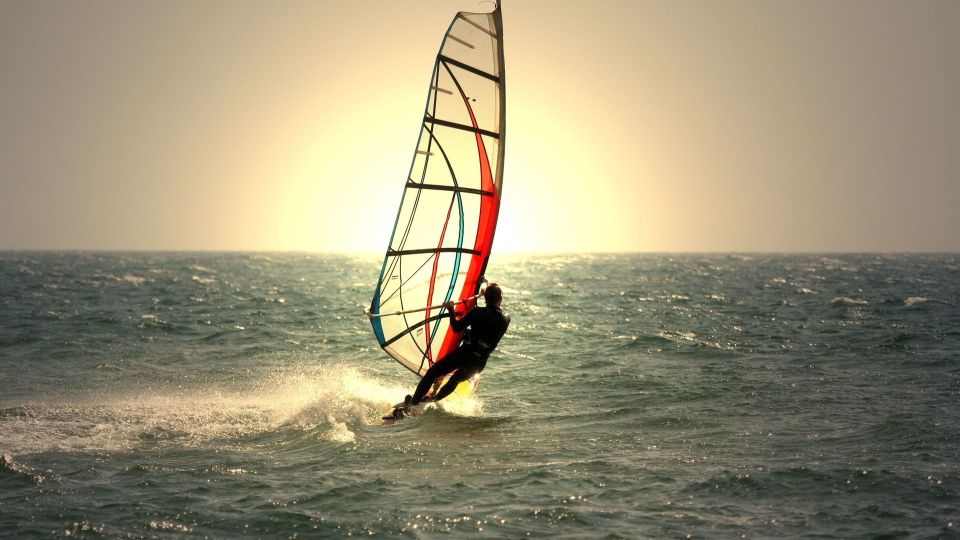
This setup works for a wide range because the bay is forgiving and the open water is available when you’re ready.
You’ll likely enjoy it most if:
- You’re a beginner who wants calm, shallow conditions and a quick path to confidence
- You’re intermediate and want a structured way to progress without chaos
- You’re advanced enough to handle stronger winds when conditions allow
If you’re the kind of rider who expects long, uninterrupted open-ocean mileage, you might find the day short because it’s only 1 hour. But if your goal is skill building with the right environment, the format is strong.
Also, if you like activities that are close to Miami, this fits. You’re not spending half the day on logistics to get to the “right” water. You’re in Key Biscayne, close enough that a fun wind session feels like a real plan, not a major expedition.
Should You Book This Miami Windsurfing Session?
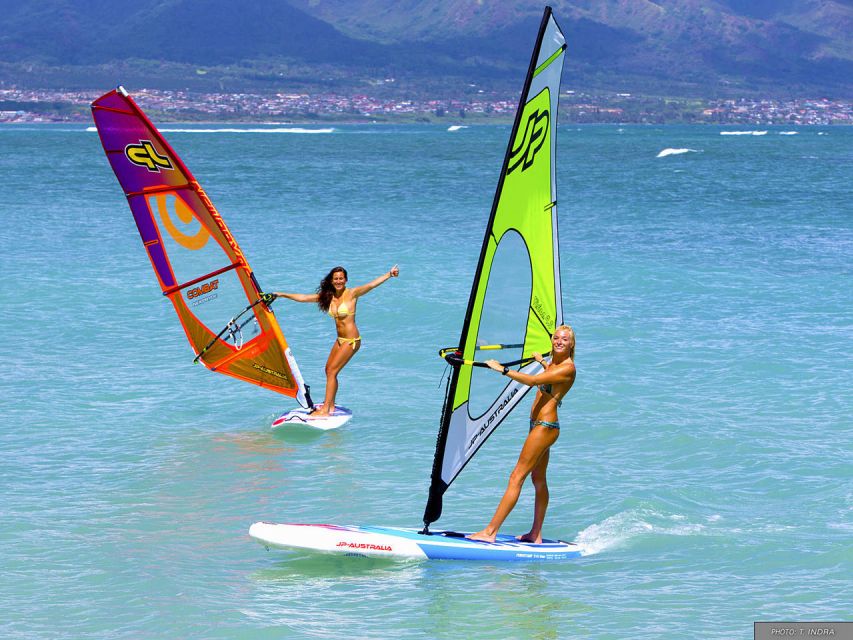
Yes, if you want windsurfing that makes sense for your level, in a place that lowers stress for beginners and still offers real wind opportunities for experienced riders. The combo of protected bay conditions, shallow training water, and small-group coaching is exactly what helps people learn without feeling overwhelmed.
Book it especially if you’re curious but worried about the ocean side. Here, you get a chance to learn in an area where getting off and walking back is part of the safety logic.
I’d hesitate only if your budget can’t absorb the extra $40 due upon arrival or if you’re counting on a very specific start time regardless of weather. Wind sports don’t care about our schedules, and this one is honest about that.
If you want a short, well-managed way to try windsurfing near Miami—and actually come away with skills—the value is there.
FAQ
How much does it cost?
The starting price is $39 per person for a 1-hour setup rental. There is also $40 USD due upon arrival to cover beach fee, tax, and insurance.
How long is the windsurfing session?
The activity duration is 1 hour. Starting times depend on availability.
What skill level is this for?
It’s designed for all levels, from first-timers to advanced riders, using calm bay water for learning and stronger open water when conditions allow.
Where exactly do I meet for check-in?
After entering Key Biscayne by toll, take the first beach entrance on your right. In the parking lot, continue along the beach until you see two large containers surrounded with flag poles.
What do I need to bring to check in?
Bring a valid photo ID or passport. Participants must complete paperwork at check-in.
Is there an age limit?
The minimum age is 5 years old. A parent or guardian must be present for anyone under 18.
How big is the group?
The group is limited to 10 participants.
What’s included in the rental?
Included are the 1-hour rental of a standard windsurfing setup, all safety equipment, free parking, bathroom/shower access, and storage space.
Can I add lessons or extra time?
Yes. Lessons and increased duration are available as optional add-ons at check-in, along with optional equipment upgrades like a harness or performance gear.
What time constraints should I plan for?
Start times may be delayed due to weather or other factors. Equipment must be returned 30 minutes before sunset, and the activity ends back at the meeting point.